
Home / Products
Products
What we stock, and what each category is for. Most of it can be heard in the demo room. Prices depend on model and configuration.
Picture
Projectors and screens
Brightness is matched to the room, not to the specification sheet. This is the decision that most often gets made wrong elsewhere.
Three numbers decide which projector suits a room: how much light it gets, how far back the projector can sit, and how wide a screen you want. Get those measured and the shortlist usually comes down to two or three models.
Lamp, laser or LED. Laser has largely replaced lamps at the mid and upper end. There is no lamp to replace, it starts instantly, and the brightness stays consistent over its life. Lamp models are still good value if the projector will not run for long hours.
Screen choice matters as much. In a room with ambient light, a light-rejecting screen surface does more for the picture than spending the same money on a brighter projector. In a dark room, a plain white surface is usually the right answer.
Fixed frame or motorised. A fixed frame gives a flatter surface. A motorised screen disappears when the system is off, which matters in a living room. Both are supplied and fitted.
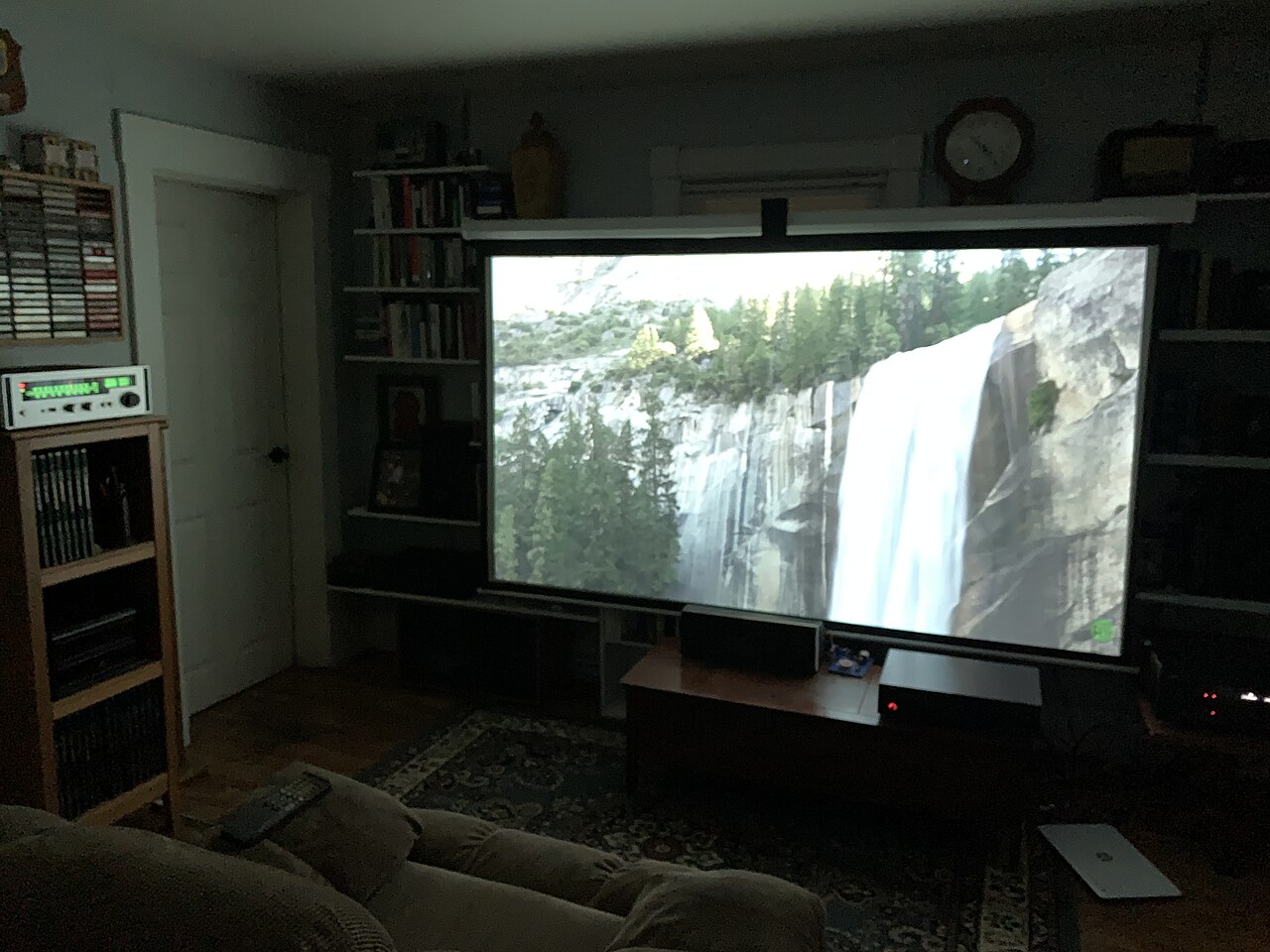
- Brands
- JVC, Epson, BenQ, Optoma, Sony, Yaber
- For gaming
- Models that genuinely support 4K at 120 Hz with low input lag, checked on the actual unit
- Screens
- Fixed frame, motorised, and surfaces that reject room light
- Also supplied
- Ceiling mounts, extension columns, and high-grade HDMI for long runs
Surround sound
AV Receivers
The receiver is sized against the speakers it has to drive, not against the largest number on the box.
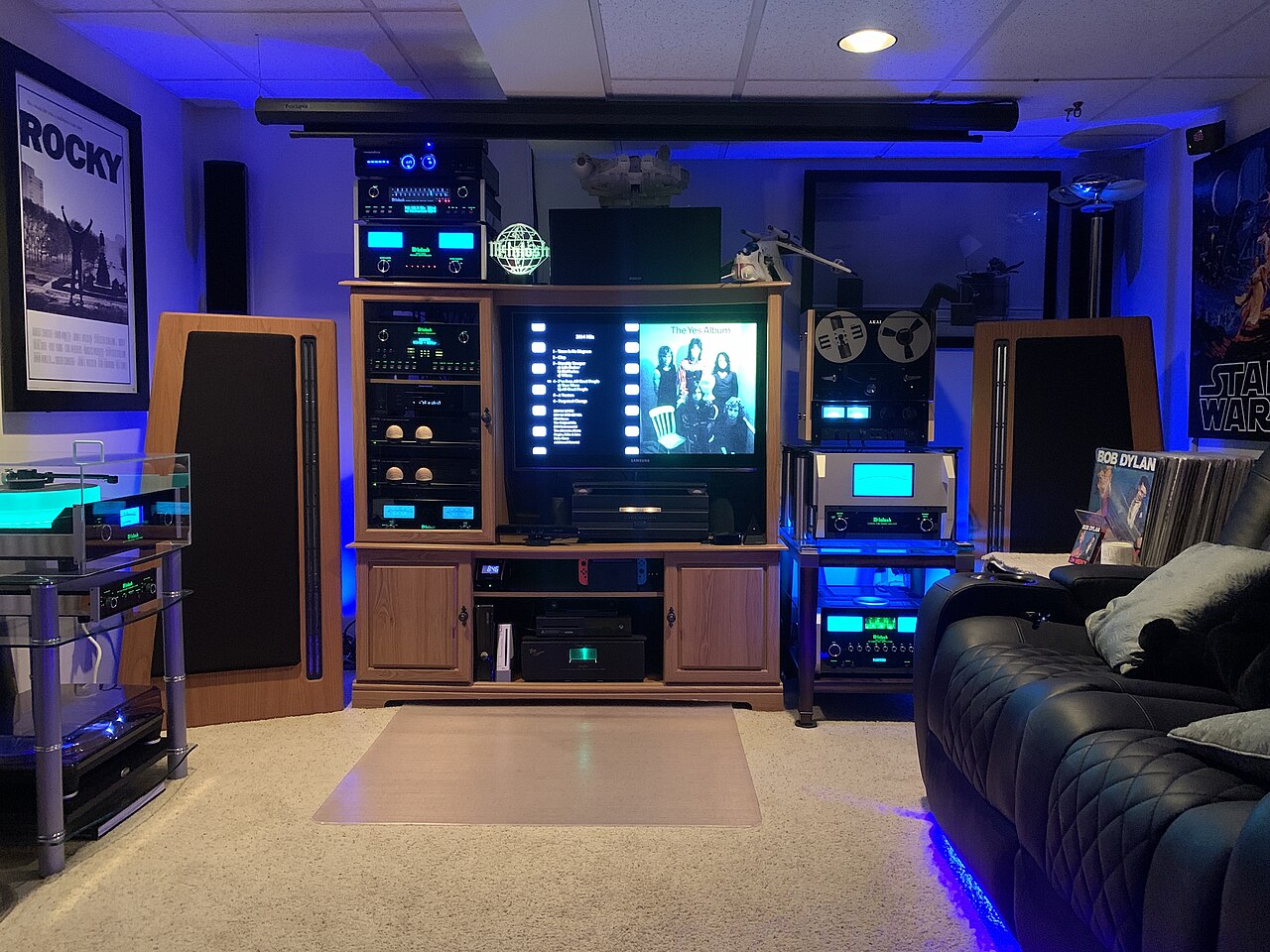
Quoted power figures are measured with one or two channels running, not all of them at once. What matters is whether the receiver holds its output with every channel working. A lower-rated receiver with a stronger power supply will often outperform a higher-rated one.
Speaker count. 5.1 covers most living rooms. 7.1.4 and above belong in dedicated rooms with the width and ceiling height to place the speakers properly. Buying channels a room cannot use is money spent for no gain.
Check the picture path. If a console is involved, confirm the HDMI inputs support 4K at 120 Hz. Some receivers list the feature but provide it on only certain inputs. We test it on the unit instead of trusting the manual.
Room correction. Most receivers include it, and it is genuinely useful. It is not a substitute for acoustic treatment, though. It corrects what it can measure at the listening position; it cannot remove a reflection.
- Brands
- Denon, Marantz, Onkyo, Pioneer, Anthem, Arcam, NAD, Tonewinner
- Channels
- 5.1 through to 13 channels with height processing
- Formats
- Dolby Atmos, Auro-3D, DTS:X, 4K and 8K HDR pass-through
- Service
- We repair receivers, including HDMI board faults on units bought elsewhere
Music
Stereo Amplifiers
For music. A two-channel amplifier of the same price as a surround receiver will usually play music better, because all the budget goes into two channels.
If most of your listening is music, a stereo amplifier and a good pair of speakers is often the better buy. It also pairs well with a surround system: some receivers have pre-outs so a separate stereo amplifier can drive the front left and right channels for films, and take over entirely for music.
Integrated or separates. An integrated amplifier combines preamplifier and power amplifier in one box, which is simpler and cheaper. Separates give more flexibility and more upgrade paths. For most rooms, integrated is the sensible answer.
Built-in DAC and streaming. Most current integrated amplifiers include both. Worth having if your sources are digital, and it saves a box and a cable.
- Brands
- audiolab, NAD, Arcam, Marantz, Denon
- Typical use
- Music-first systems, and driving front channels in a larger setup
- Sources
- Streaming, CD, turntable with the right phono input
Sound
Speakers
Cabinet size should follow room size. A large floor-stander in a small room is a common and expensive mistake.
Buy the front three together. Left, centre and right should be from the same range so voices stay consistent as they move across the screen. The centre channel carries most of the dialogue, so it is the wrong place to save money.
Surround speakers do less work than people expect and can be smaller. Position matters more: at or slightly above ear height, and to the sides, not behind you.
Efficiency matters as much as power. Some speakers play louder than others on the same amplifier. If your receiver is modest, more efficient speakers are an easier way to get volume than a bigger amplifier.
Bookshelf against floor-standing. In rooms under about 3.5 m wide, a good bookshelf pair with a subwoofer usually beats floor-standers, which need room to breathe and distance from the wall behind them.
- Brands
- KEF, Klipsch, Polk Audio, Monitor Audio, Q Acoustics, Wharfedale, Sonus faber, Taga Harmony, Mission, Magnat, Heco, Cerwin Vega, BIC America
- Formats
- Floor-standing, bookshelf, centre, on-wall, height and Atmos-enabled
- Packages
- Matched 5.1 and 7.1 sets, which we recommend over mixing ranges
- Service
- Driver and surround replacement, internal repairs, cabinet work
Built in
In-wall and in-ceiling speakers
The practical way to add height channels, and the only way to get a full layout into a room where nothing should be visible.
In-ceiling speakers are how Atmos and Auro-3D height channels are normally delivered. In-wall speakers do the same for front and surround channels where cabinets are not wanted.
Plan them before the false ceiling goes up. Cutting into a finished ceiling or an existing concrete slab is considerably more expensive and more disruptive. If your property is under construction, this is the point to involve us.
Angled or aimable drivers are worth the extra in a room where the ceiling speaker cannot sit directly where the layout wants it. They let the sound be aimed at the seating instead of straight down.
Grilles are supplied paintable so they finish flush with the ceiling colour and stop being noticeable. Back boxes are used where the construction needs them.
- Brands
- KEF, Monitor Audio, Polk Audio, Taga Harmony, BIC America
- Best planned
- Before plastering and before the false ceiling
- Also possible
- Retrofit into a finished ceiling in most cases. Ask for a site visit.
Bass
Subwoofers
Position affects a subwoofer more than its specification does. Two smaller units usually beat one large one.
A single subwoofer produces an uneven response across a room: strong in some seats, thin in others. That is the room, not the subwoofer. Two units placed correctly even it out, and in a room with more than one row of seating we will normally recommend it over buying one larger box.
Sealed or ported. Sealed cabinets are tighter and better for music. Ported cabinets go lower and louder for the money, which suits film. Both are supplied; which one depends on what you watch.
Placement is set by measurement. We find the position that gives the most even bass across the seats instead of using the nearest corner, then set it up as part of the calibration.
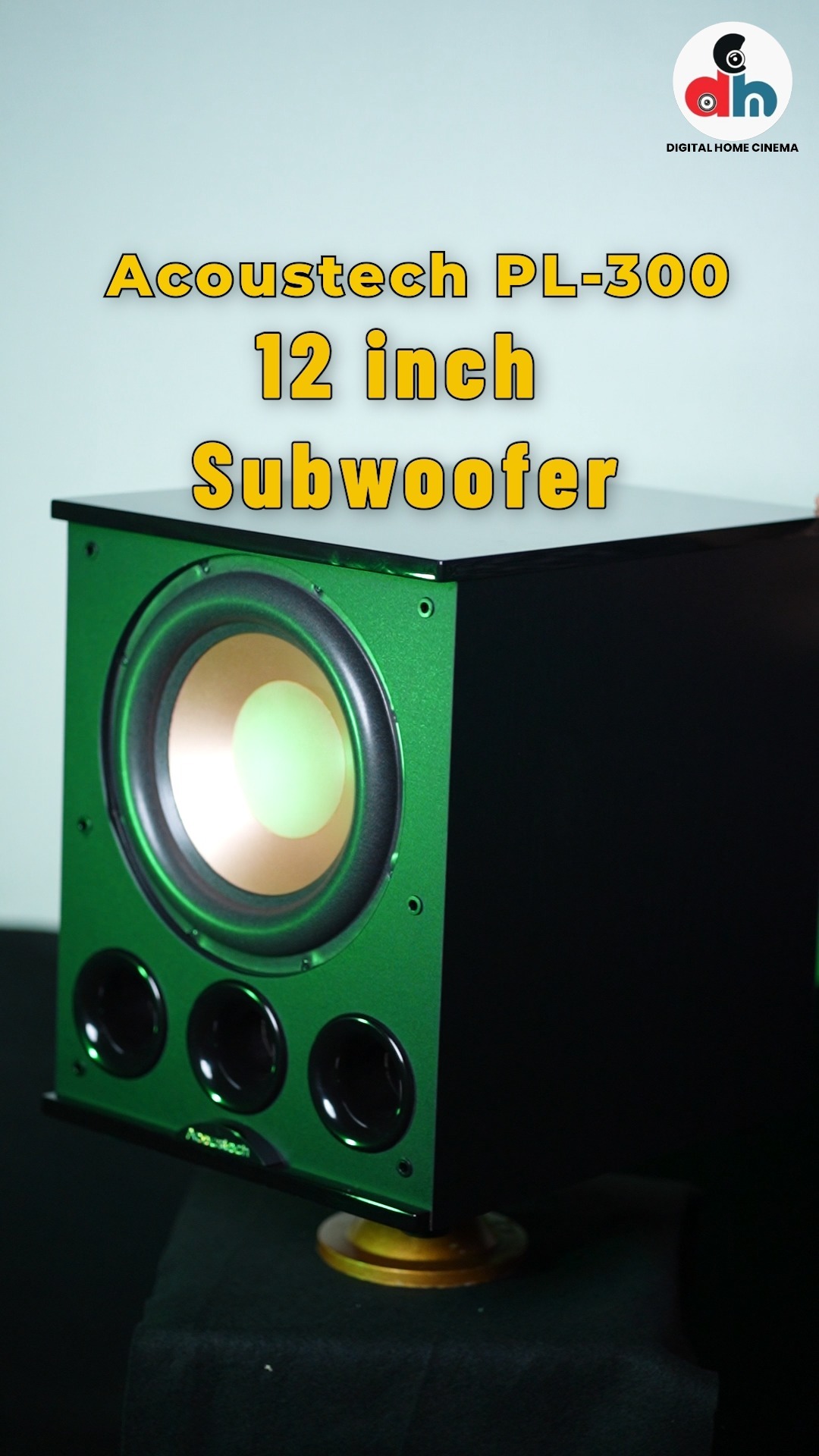
- Brands
- SVS, Acoustech, BIC America, Polk Audio, Monitor Audio
- Sizes
- Eight through to fifteen inch, sealed and ported
- Recommended
- Two units in rooms with two or more rows of seating
Accessories
Cabling, Mounts and Treatment
The parts nobody photographs, which are also where a lot of installations quietly go wrong.
-
HDMI cable rated for long runs
Cable rated 48 Gbps on any run over about three metres. Cheaper cable on a long runs cause intermittent dropouts and frame loss that are far harder to diagnose than a cable that fails outright. On very long runs we use fibre-optic HDMI.
-
Speaker cable and connectors
The right thickness for the length of the run, terminated properly. Long runs to the surround speakers need heavier cable than short runs at the front.
-
Acoustic panels and bass traps
Panels for the side walls, bass traps for the corners, and panels for the rear wall. Supplied in fabric finishes chosen to suit the room.
-
Mounts and racks
Projector ceiling mounts and extension columns, speaker brackets, and equipment racks with ventilation and rear access planned in.
-
Power conditioning
Surge protection and clean power for the rack. Worth having where the supply is unreliable, which is most places.
-
Seating and risers
Recliners with cupholders, and the carpentry for a tiered riser so the second row sees over the first.