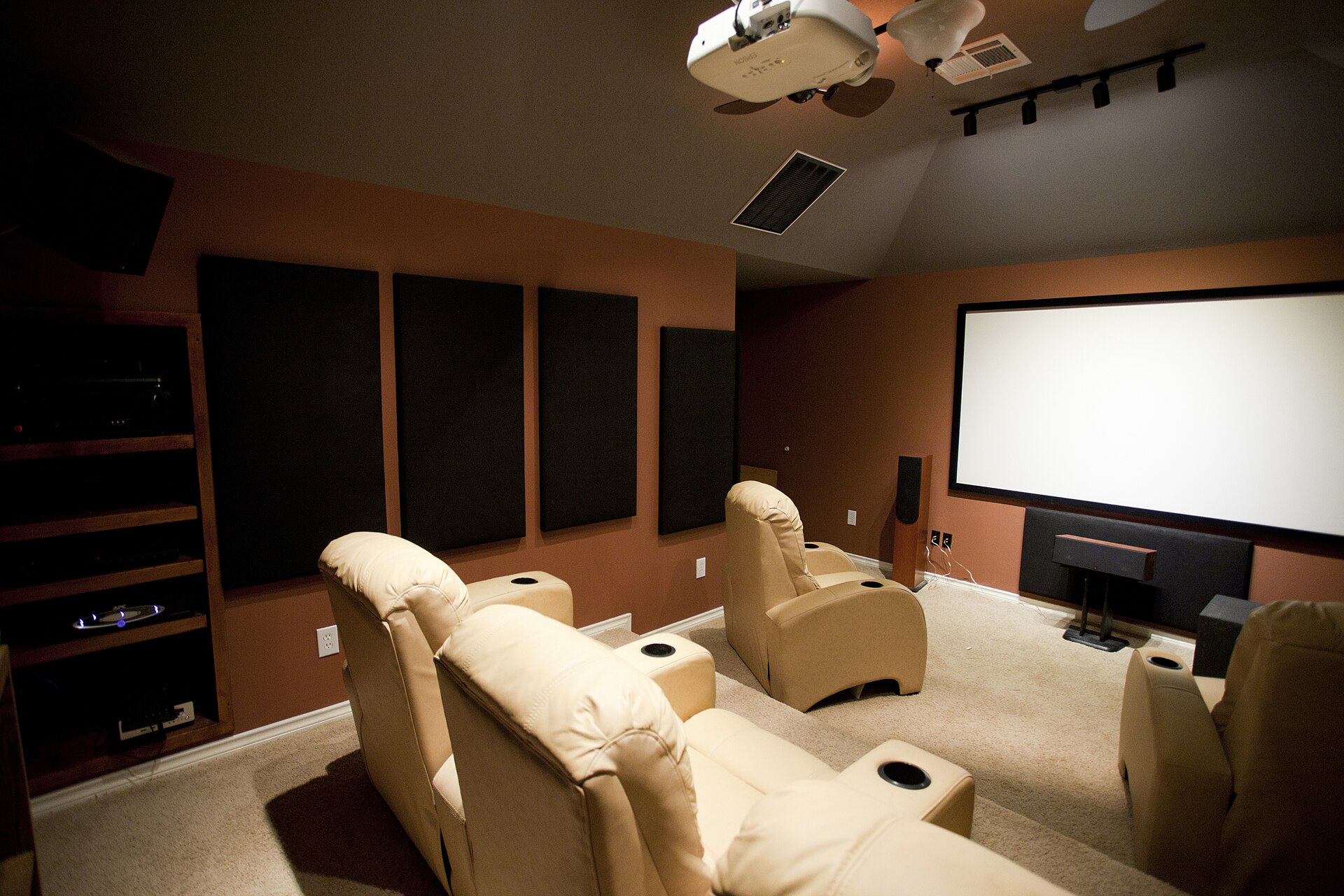
Choosing a display
Projector or television?
It depends mainly on one thing most people do not measure: how much light the room gets at the time you watch.
A projector gives far more screen for the money. A hundred-inch picture from a projector costs a fraction of a hundred-inch television, and a large picture at the right distance is easier to watch for two or three hours. In a room that can be darkened, a projector is the better choice.
Light is the problem. A projector reflects its picture off a screen, so any other light in the room competes with it. A television makes its own light and overpowers the room. In a hall with large windows where the family watches at four in the afternoon, a bright television will look better than a projector costing twice as much. We will tell you that, even though the projector is the bigger sale.
How to decide, practically
Look at when the room is used. If most viewing happens after dark, or the room has curtains that genuinely block light, a projector is the better buy. If most viewing is daytime and the windows are large, go with a panel and spend the difference on sound.
If the use is genuinely mixed, there are two options. A brighter laser projector with a screen made to reject room light will hold up in moderate light. Or a television for daytime and a projector for evenings, which is common in houses that have both a living room and a separate cinema room.
Screen size and seating distance
Bigger is not automatically better. As a working rule, sit about 1.5 times the screen width away from it. At 2.5 m from the screen that means a picture of about 100 inches. Closer than that and it stops being comfortable to watch.
For gaming
Either can work. Check the screen genuinely supports 4K at 120 Hz, and that it does so on the input you will actually use. Many list the feature but provide it on only one port, or drop to 60 Hz once HDR is switched on. It is worth checking on the actual screen.