
Houses here are built from hard, reflective material: vitrified tile floors, plastered concrete walls, large glazed openings and a flat slab ceiling. Almost nothing in a typical room absorbs sound.
Sound leaves the speaker, hits those surfaces and reaches your ears slightly after the direct sound. It does not sound like an echo. It sounds like unclear dialogue. This is why people switch on subtitles for films they can follow perfectly well on headphones.
Bass is worse. Low notes are long enough to interact with the size of the room itself. The result is one seat where the bass is overwhelming and another, a metre away, where it almost disappears. That is the room, not the subwoofer.
What Auto-Calibration Can And Cannot Do
Every current receiver includes room correction and it is worth running. It measures the sound at your seat and adjusts to compensate.
What it cannot do is remove a reflection. It can turn down a frequency the room is exaggerating, but the reflected sound still arrives. Correction is a useful final adjustment. It is not a substitute for treating the room.
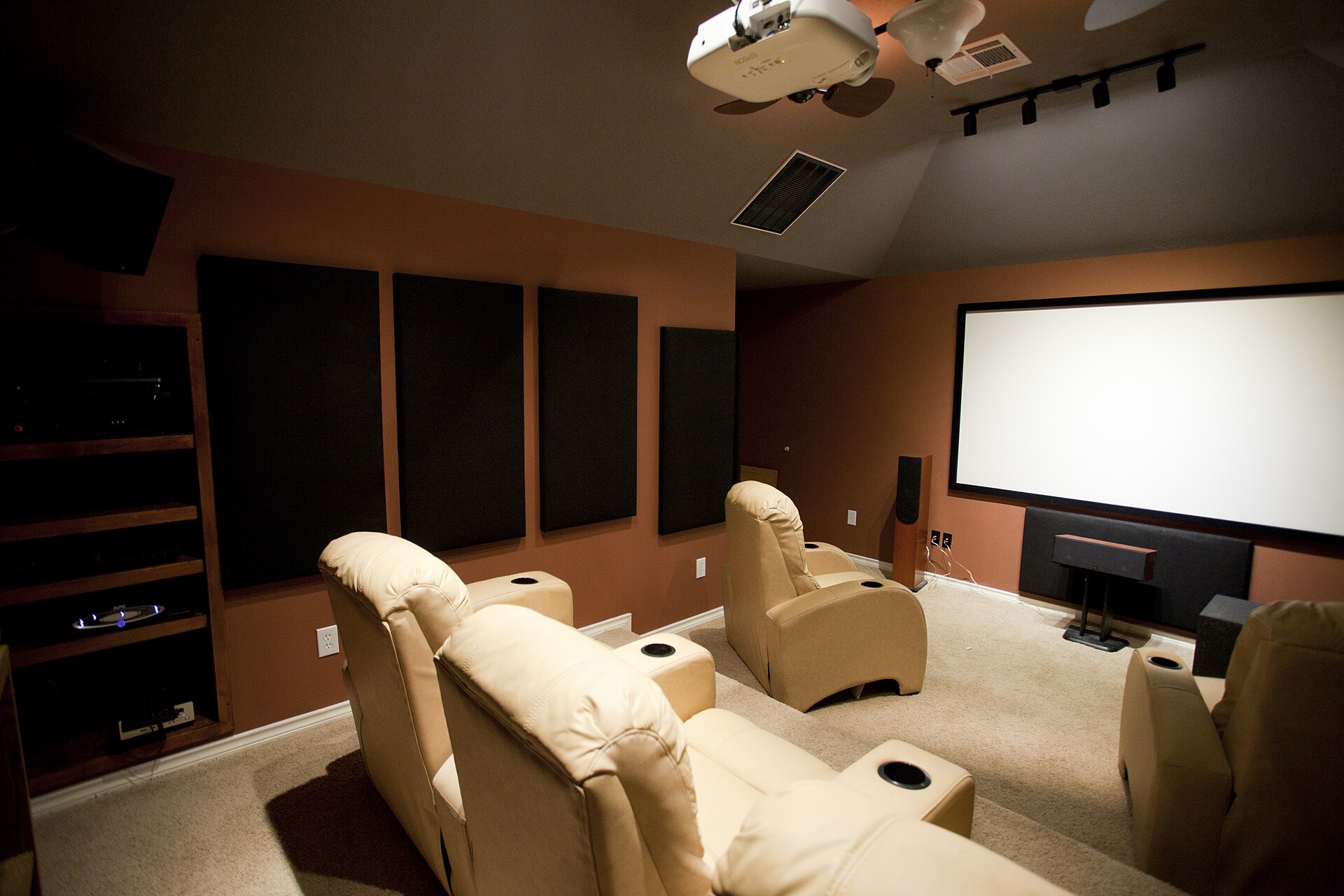
Three Things That Help, In Order Of Value For Money
First, panels on the side walls. Put them where sound from the front speakers bounces off the wall on its way to you. They do more for dialogue clarity than any equipment upgrade at the same price. In a living room, heavy curtains and a rug on a tiled floor get you a long way.
Second, bass traps in the corners. Low notes collect where the walls meet. Treating the corners evens out the difference between seats.
Third, a second subwoofer instead of a bigger one. Two placed by measurement give a far more even result across a row of seats than one large one.
None of this requires a dedicated room. A living room with a rug, curtains and two well placed subwoofers will outperform an untreated room with considerably more expensive equipment in it.